Wet Materials Remain
Drywall, flooring, cabinetry, or other materials remain damp after visible water is removed.
Water mitigation focuses on limiting additional moisture damage, controlling water spread, identifying affected materials, and stabilizing wet areas before further drying or restoration.
Call (855) 317-2617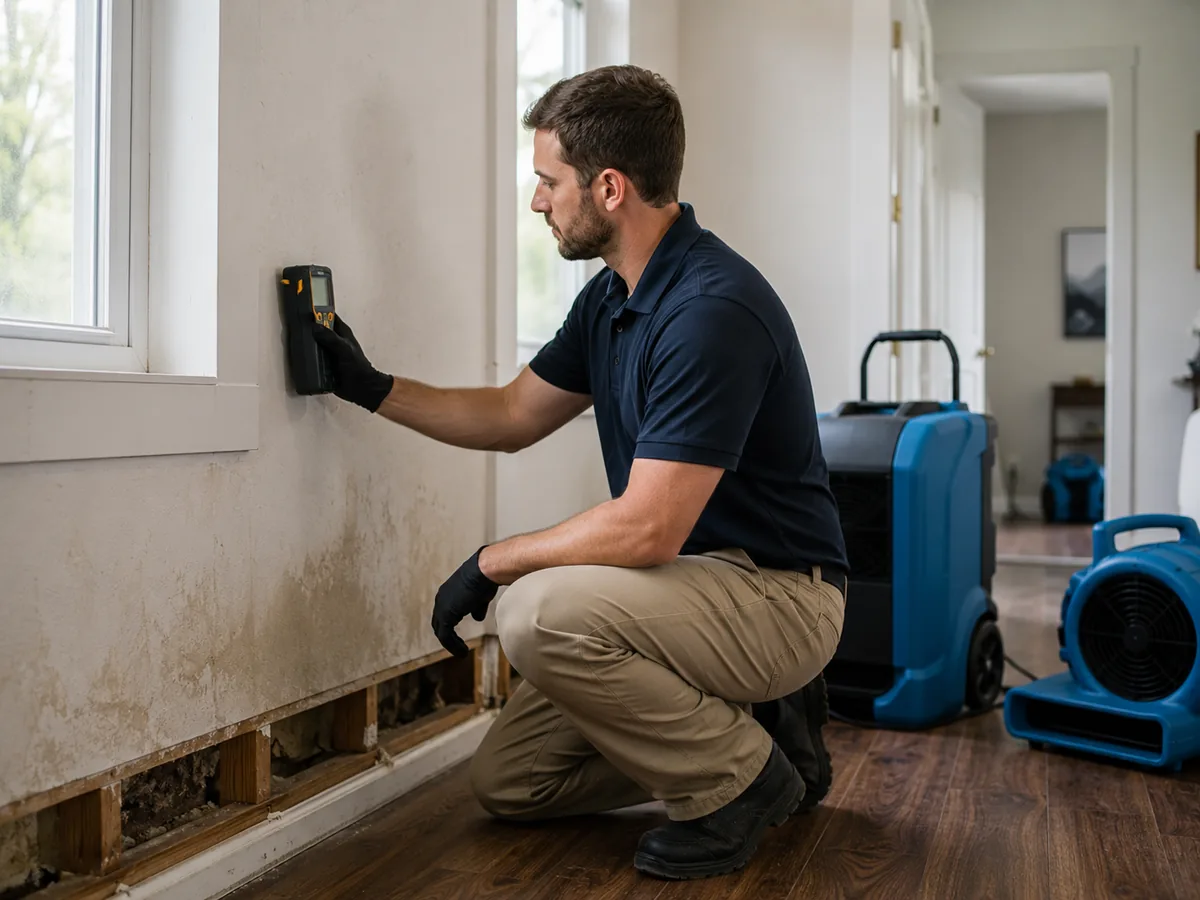
These situations can help you recognize when moisture may be affecting materials beyond the visible water.
Drywall, flooring, cabinetry, or other materials remain damp after visible water is removed.
Water has moved beyond the original leak or affected nearby rooms and materials.
Water stains, musty areas, or damp surfaces may point to retained moisture.
Materials may need moisture control before normal conditions can be restored.
Water may move into drywall, flooring, insulation, cabinetry, wall cavities, and adjoining spaces even after visible water is gone.
Moisture can travel into drywall, flooring, insulation, cabinetry, wall cavities, and adjoining spaces.
Plumbing leaks, flooding, storms, sewage, and other water sources can affect what mitigation steps may be appropriate.
Water mitigation information can help visitors understand how additional moisture impact may be limited and affected areas stabilized.
Determine where water and moisture have reached.
Address conditions that may allow moisture to continue spreading.
Evaluate flooring, drywall, cabinetry, insulation, and other affected materials.
Moisture control and drying may help move affected areas toward normal conditions.
Some conditions can make it useful to review water mitigation information sooner.
Visible water has been removed but materials remain wet.
Moisture has spread into walls, flooring, or nearby materials.
A leak has affected multiple rooms, surfaces, or building materials.
Storm or floodwater left materials damp after visible water was removed.
Start with the water source, affected areas, and what remains damp, then use that information to explore the relevant next step.
Share the water source, affected areas, and what remains wet or damp.
The source, materials, moisture spread, and property conditions help determine the relevant mitigation path.
After moisture is controlled, drying and other service needs may still need to be addressed.
Water extraction removes standing or pooled water. Water mitigation helps limit additional moisture impact and stabilize affected areas. Drying and dehumidification helps reduce remaining moisture in wet materials and spaces.
Water mitigation helps limit additional moisture impact and stabilize affected areas after a water problem.
Drying wet materials and managing remaining moisture can be part of the restoration process, not a standalone service page.
Choose the state where the property is located to explore Water Mitigation information in that location.
Explore Water Mitigation information for properties in Florida.
Explore Florida →Explore Water Mitigation information for properties in Texas.
Explore Texas →Explore Water Mitigation information for properties in Louisiana.
Explore Louisiana →Explore Water Mitigation information for properties in North Carolina.
Explore North Carolina →Moisture can remain in different spaces and building materials after a water problem.
Flooring, walls, ceilings, kitchens, bathrooms, and common spaces can retain moisture after a water problem. Explore Residential Water Damage Restoration.
Damp materials, seepage, flooding, and moisture moving downward can affect lower levels.
Offices, retail spaces, facilities, and work areas can face different water damage concerns. Explore Commercial Water Damage Restoration.
Drywall, flooring, insulation, cabinetry, subfloors, and porous materials can retain moisture after a water problem.
A few practical precautions can help visitors avoid unnecessary risks while deciding what to do next.
Do not enter water near exposed wiring, electrical equipment, or other electrical hazards.
Sewage and floodwater may contain contaminants. Avoid unnecessary contact.
Wet ceilings or heavily saturated materials may become unsafe.
If a supply valve or source can be safely shut off without entering a hazardous area, limiting additional water may help.
Clear answers to help visitors understand moisture control and decide what to explore next.
Water mitigation focuses on limiting additional moisture impact and stabilizing affected areas after a water problem.
Water extraction focuses on removing standing or pooled water. Water mitigation focuses on limiting additional moisture impact after visible water is removed.
Mitigation information may be useful when materials remain damp, moisture has spread, or water affected more than the original area.
Drywall, flooring, insulation, cabinetry, subfloors, and other porous materials can retain moisture after a water problem.
Mitigation can work alongside drying and dehumidification, which may help reduce remaining moisture in wet materials and spaces.
Call (855) 317-2617 to discuss the water source, affected areas, and what remains damp.