Water Is Still Moving
Water actively entering a room, spreading across a floor, or coming from a plumbing failure can affect more areas over time.
Active leaks, standing water, sudden flooding, burst plumbing, sewage backup, storm intrusion, and wet floors or walls can all call for a clear next step.
Call (855) 317-2617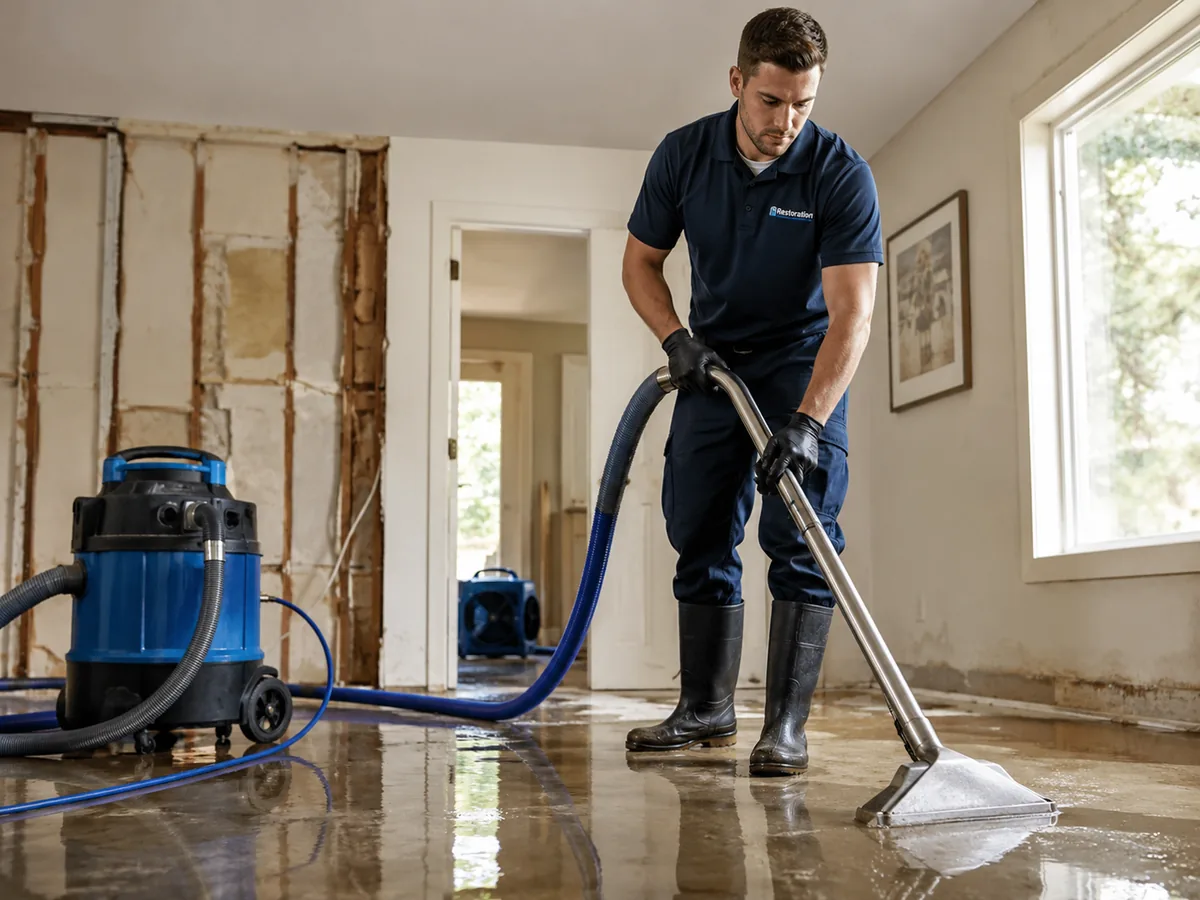
These situations can help you recognize when it may be useful to explore emergency water damage information.
Water actively entering a room, spreading across a floor, or coming from a plumbing failure can affect more areas over time.
Standing water, flooded rooms, soaked carpet, or wet flooring can indicate a need to explore extraction and moisture-control options.
Wet drywall, ceiling leaks, or water moving through walls can affect materials beyond the visible surface.
Sewage contamination, storm-related water intrusion, or water near electrical systems should be treated with added caution.
Water can move into flooring, drywall, insulation, wall cavities, lower levels, nearby rooms, and other porous materials. The source also matters, whether it is a plumbing leak, floodwater, sewage, or storm intrusion.
Even when a surface looks manageable, moisture may remain in nearby materials that need further attention.
Clean plumbing water, floodwater, sewage, and storm intrusion can each point to different cleanup and service considerations.
The right path can depend on the water source, affected materials, visible conditions, and whether contamination is involved.
Understanding where the water is coming from can help identify the service information most relevant to the property.
Standing water and nearby materials can be reviewed to understand where water has spread and what may need attention.
Limiting additional moisture damage and beginning stabilization can be an important part of the overall restoration process.
Sewage and other contaminated water can require a different cleanup path from ordinary plumbing water.
Certain conditions can make it especially useful to review the next step without delay.
Active water can continue to affect floors, walls, and nearby materials.
Water moving across rooms or into flooring can change the extent of the affected area.
Sewage or other contaminated water should be approached carefully to avoid unnecessary contact.
Water near exposed wiring, equipment, or heavily wet ceilings may create additional safety concerns.
Start with the water source, affected area, and what can be seen, then use that information to explore the right service path.
Share where the water is coming from, what areas are affected, and what you can currently see.
The situation may point toward extraction, mitigation, sewage cleanup, flood restoration, storm damage help, or another service path.
Move toward the service that best matches the water source, affected materials, property type, and urgency.
Choose the state where the property is located to explore Emergency Water Damage Restoration information in that location.
Explore Emergency Water Damage Restoration information for properties in Florida.
Explore Florida →Explore Emergency Water Damage Restoration information for properties in Texas.
Explore Texas →Explore Emergency Water Damage Restoration information for properties in Louisiana.
Explore Louisiana →Explore Emergency Water Damage Restoration information for properties in North Carolina.
Explore North Carolina →The affected spaces and materials can help clarify which service information may be most useful to explore.
Living areas, bedrooms, kitchens, and bathrooms can all be affected by water intrusion. Explore Residential Water Damage Restoration.
Standing water, seepage, and flooding can affect lower levels and nearby materials.
Offices, retail spaces, facilities, and work areas can face different water damage concerns. Explore Commercial Water Damage Restoration.
Flooring, drywall, ceilings, insulation, and cabinetry can all retain moisture after a water problem.
A few practical precautions can help visitors avoid unnecessary risks while deciding what to do next.
Do not enter water near exposed wiring, electrical equipment, or other electrical hazards.
Sewage and floodwater may contain contaminants. Avoid unnecessary contact.
Wet ceilings or heavily saturated materials may become unsafe.
If a supply valve or source can be safely shut off without entering a hazardous area, limiting additional water may help.
Clear answers to help visitors understand active water problems and decide what to explore next.
Active leaks, standing or spreading water, sudden flooding, sewage contamination, storm intrusion, and water near electrical systems can all call for added attention.
If it is safe to do so, limit additional water at the source. Avoid hazardous areas and call (855) 317-2617 to discuss the situation.
Standing or pooled water can affect floors and nearby materials. The water source, affected area, and safety conditions can help determine whether extraction information is relevant.
Water extraction focuses on removing standing or pooled water. Water mitigation focuses on limiting additional moisture damage and beginning stabilization.
Avoid unnecessary contact with contaminated water. Sewage or wastewater can require a different cleanup path from ordinary plumbing water.
Share the water source, affected area, and visible conditions when you call (855) 317-2617. That can help identify the relevant service direction.